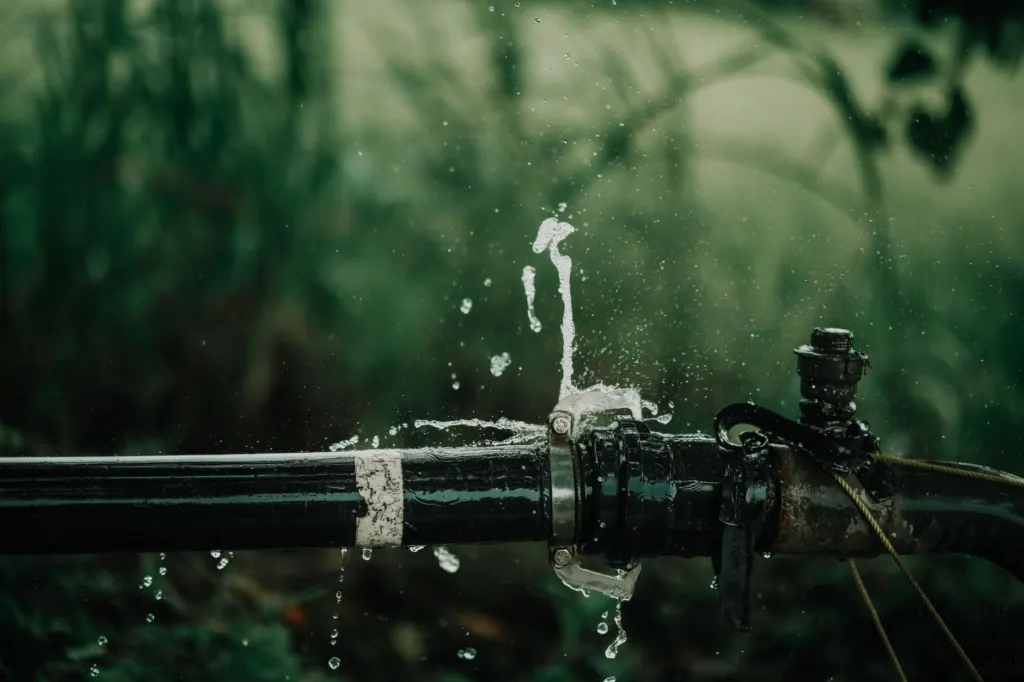
What to do if a pipe bursts: turn off the water at the stopcock straight away. Then switch off the boiler and open all the taps to drain the pipes. Keep away from any electrics the water has reached. Once the flow stops, catch the water, photograph the damage and call a qualified plumber.
What to do if a pipe bursts: the first five minutes
- Turn off the stopcock. Also called the stop tap, it is usually under the kitchen sink. Otherwise, check the airing cupboard, utility room, downstairs toilet, under the stairs or the garage. Turn it clockwise to close it.
- Keep away from wet electrics. If water has reached sockets, wiring or appliances, do not touch them. Switch the electricity off at the consumer unit (fuse box) only if you can reach it safely.
- Switch off the heating. The Consumer Council for Water (CCW) advises turning off the central heating boiler or immersion heater after a burst.
- Open all the taps. Open every hot and cold tap to drain the pipes and reduce flooding.
- Catch and move. Put buckets and towels under the leak and move valuables and electrical items away.
If you cannot find or turn the stopcock
Old stopcocks are often stiff. Turn it slowly and never force it, which is also NI Water’s advice. If it will not move, look for the outside stop tap. It is usually under a small cover in the footpath outside your home, or just inside your boundary. You may need a stop tap key to turn it.
If water keeps flowing and you cannot stop it, call your water company’s emergency line. In Northern Ireland, NI Water’s Leakline is free and open 24 hours a day on 0800 0282011.
Who fixes which pipe
Who pays depends on where the burst is, as United Utilities explains in its guide to water supply pipes.
| Where the burst is | Who usually fixes it |
|---|---|
| Water main or pipe in the street, up to your property boundary | Your water company |
| Supply pipe from the boundary into your home | The property owner |
| Pipes and fittings inside your home | The property owner, or the landlord if you rent |
| Supply pipe shared with neighbours | All the homes it serves, jointly |
If you rent, GOV.UK lists pipes among the repairs a landlord is always responsible for.
Checklist: once the water is off
- Before you clear up, take photos or videos of the damage, as CCW advises. Then ask your home insurer whether leaks and bursts are covered before you pay for repairs.
- Mop up standing water with towels and open windows to help things dry.
- Check ceilings below the leak. A sagging, bulging ceiling can hold water, so keep people out of that room.
- If water reached the electrics, leave them off until a registered electrician says it is safe.
- If you rent, tell your landlord or letting agent straight away and keep a record of when you told them.
- If you have a water meter, ask your water company about a leak allowance. Rules vary; for example, United Utilities’ leak allowance needs the leak repaired within 30 days of finding it.
- After the repair, close all the taps before you turn the stopcock back on.
Do you need an emergency plumber tonight?
Once the water is off, a burst pipe can often wait until the morning. Out-of-hours call-outs usually cost more, so waiting can make sense if you can manage without water. However, call someone tonight if you cannot stop the water, or if someone vulnerable at home cannot manage without water or heating.
| Situation | Usually |
|---|---|
| Water off, damage contained | Book a plumber for the morning |
| Water will not stop | Call your water company and an emergency plumber |
| Water near electrics | Power off at the consumer unit if safe, then call a registered electrician |
| Burst in the street, outside your boundary | Report it to your water company |
Either way, do not attempt a permanent repair yourself. WaterSafe says burst pipes need a qualified repair, and DIY work can breach the water regulations. Its postcode search finds approved plumbers near you.
If the electrics are affected, read our guide to a power cut and what to do. If water is coming through the ceiling from the roof instead, see roof leaking in heavy rain.
Why pipes burst, and how to lower the risk
Freezing is a common cause, because water expands as it turns to ice. The pressure can split a pipe or pull a joint apart. Pipes in unheated spaces are most at risk: lofts, garages, basements, outside taps and the boiler’s condensate pipe. So lag exposed pipes and cover outside taps. Keep the thermostat at 14°C or more, even while you are away, as WaterSafe advises. Pipes can still freeze and burst with the water turned off, because closing the stop tap does not empty them. Before a long trip, NI Water suggests draining the system as well.
If a pipe is frozen but not split, CCW advises turning off the stop tap and the heating first. Then leave the cold tap open so thawed water can escape. Warm the pipe slowly from the tap end with a hot water bottle or a hairdryer on a low setting. Never use a naked flame, a blowtorch or boiling water. If the cold has also stopped your heating, see boiler stopped working.
Also, learn where your stopcock is now, while nothing is wrong. WaterSafe suggests making sure it turns easily and checking it every six months. CCW has more winter advice on frozen and burst pipes.